
Falls prevention: In our book, the best fall is the one that never happens.
Falls happen fast, but the warning signs usually start much earlier.
Falls prevention has traditionally focused on the things we can see: balance, mobility, medications and environmental hazards. Those things matter. But changes in sleep, bathroom habits, activity and other everyday patterns can also provide important clues.
At Amba, we’re big believers in getting ahead of the fall. So for Falls Prevention Awareness Week, we’ve pulled together 10 practical ways senior living communities can reduce fall risk, backed by resources from the CDC and AHRQ, along with a little of what we’ve learned from continuous health monitoring.

See more about reducing falls. Get the case study.
95% reduction in hospitalizations and an increase in NOI.
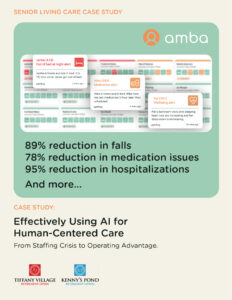
This case study covers two years of data at Tiffany Village and Kenny’s Pond. They experienced an 89% reduction in falls, a 78% reduction in medication issues and a 95% reduction in hospitalizations while boosting NOI.