Value-Based Care and Remote Patient Monitoring: A Guide for Senior Living Operators
Value-based care and remote patient monitoring are rapidly becoming one of the most important operational and financial shifts in the senior care industry. Operators are no longer evaluated solely on occupancy and service delivery but increasingly on outcomes, prevention, and cost efficiency across the care continuum.
This shift is being driven by rising resident acuity, staffing shortages, and the growing integration of remote patient monitoring (RPM) technologies into reimbursement models such as Medicare Advantage and Accountable Care Organizations (ACOs).
For senior living operators, this is a financial and strategic transformation that directly impacts sustainability and competitiveness.
In this guide, we will break down how value-based care works in senior living environments, how RPM enables measurable outcomes, and why this convergence is reshaping operator strategy.
Value-Based Care and Remote Patient Monitoring in Senior Living
Value-based care and remote patient monitoring in senior living refer to a healthcare model where providers are financially rewarded based on resident health outcomes rather than the number of services delivered.
This approach prioritizes preventing hospitalizations, improving chronic disease management, and supporting overall resident well-being. Remote patient monitoring serves as the operational foundation of this model by continuously collecting real-time health data.
This data typically includes heart rate, sleep patterns, movement, oxygen levels, and behavioral changes, enabling care teams to intervene early and shift from reactive treatment to proactive care.
Why Value-Based Care and RPM are Transforming Senior Living
The adoption of value-based care and RPM in senior living is driven by structural pressures across the healthcare ecosystem. These forces are reshaping senior living into an outcomes-focused care model.
Some key reasons include:
1. Rising Resident Acuity Levels
Senior living communities are seeing a steady increase in resident health complexity. Most residents now enter care settings with multiple chronic conditions such as diabetes, heart disease, and cognitive decline. This rising acuity requires continuous monitoring rather than occasional check-ins.
As a result, traditional care models are no longer sufficient to maintain safety and stability. Ultimately, higher acuity levels make continuous oversight essential for preventing avoidable complications and ensuring timely intervention.
2. Workforce Shortages
Senior living providers are facing persistent staffing challenges across clinical and caregiving roles. This shortage is increasing pressure on existing teams to manage larger workloads with limited capacity.
Remote patient monitoring helps reduce the burden of manual checks by automating routine observations and flagging only high-risk situations. This allows staff to prioritize residents who need immediate attention. In the long term, RPM improves operational efficiency and helps maintain the quality of care despite workforce constraints.
3. Shift in Reimbursement Models
Healthcare reimbursement has shifted away from pure fee-for-service toward value-based structures. In calendar year 2024, 44.9% of U.S. health care payments flowed through arrangements that held providers accountable for the quality and cost of care, with Medicare Advantage leading all lines of business at 60.0%.
This shift encourages senior living operators to adopt tools like RPM that directly support measurable outcomes. Better tracking of resident health becomes financially and clinically important. Overall, reimbursement reform is aligning senior living operations with outcome-driven healthcare economics.
4. Demand for Preventive Care
Families and residents are increasingly prioritizing early detection of health issues. Expectations now include greater transparency in care delivery.
Remote monitoring enables early identification of risks such as changes in mobility, sleep, or vital signs. This supports timely interventions before conditions escalate. As a result, preventive care is becoming a core expectation rather than an added benefit in senior living.
5. Integration of Digital Health Infrastructure
Advancements in IoT devices, cloud computing, and AI analytics are making continuous monitoring more practical and scalable. These technologies allow real-time data collection and intelligent interpretation of health patterns.
Senior living communities can now integrate these tools into daily operations without significant disruption. This creates a more connected and responsive care environment. Ultimately, digital infrastructure is enabling a shift toward proactive, data-driven care ecosystems.
Together, these forces are transforming senior living from a housing-focused model into an outcomes-driven healthcare ecosystem. The shift is a structural realignment toward continuous, preventive, and data-informed care delivery.
How RPM Works in Value-Based Care Models
Remote patient monitoring enables value-based care by converting daily resident activity into continuous clinical insight—shifting care from periodic assessments to real-time monitoring. Using sensors, wearables, sleep mats, and motion devices, it captures ongoing data.
This helps detect early signs of health changes such as reduced mobility, sleep disruption, or increased nighttime activity. These insights enable early intervention, reducing hospitalizations, readmissions, and emergency visits while improving chronic disease management.
CMS describes value-based care as care focused on quality, provider performance, and patient experience, delivered by providers who coordinate to manage a person’s overall health. RPM fits that model by supplying continuous physiologic data between visits. Evidence on execution is thinner than adoption: HHS-OIG found that 43% of Medicare enrollees receiving RPM in 2022 did not receive all three of its billable components.
Implementation Considerations for Senior Living Operators
Successful implementation of value-based care and remote patient monitoring requires careful planning. Operators must integrate RPM with existing EHR and care systems and train staff to interpret data and respond to alerts. Strong data governance is essential for HIPAA compliance and resident consent.
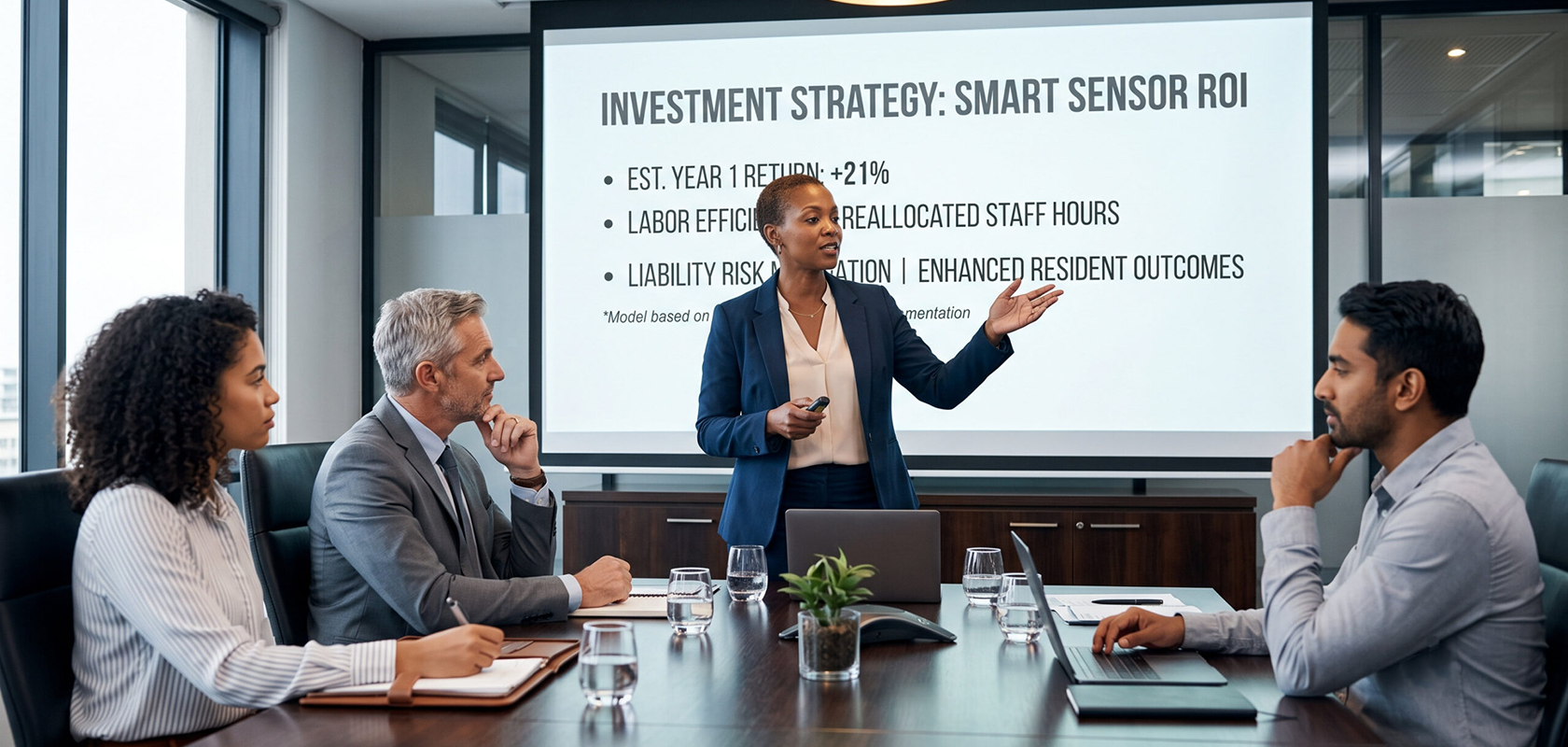
Workflows must be redesigned to embed RPM into daily care and escalation processes. Financial investment should also be weighed against long-term savings from reduced hospitalizations and improved reimbursement, supported by senior living technology platforms.
FAQ: Value-Based Care and RPM in Senior Living
1. What is value-based care in senior living?
Value-based care in senior living is a healthcare model in which providers are rewarded based on resident health outcomes rather than on the number of services delivered. It focuses on prevention, reducing hospitalizations, and improving quality of life.
2. How does remote patient monitoring support value-based care?
Remote patient monitoring supports value-based care by continuously collecting resident health data, allowing care teams to detect risks early and intervene before conditions worsen, reducing costly hospital visits.
3. Is RPM covered under Medicare reimbursement programs?
Yes, remote patient monitoring is reimbursable under several Medicare programs, including chronic care management and Medicare Advantage value-based arrangements, provided clinical and documentation requirements are met.
4. What are the biggest challenges in implementing RPM in senior living?
The main challenges include technology integration, staff training, data privacy compliance, and redesigning care workflows to respond effectively to real-time alerts.
5. Why is RPM important for senior living operators today?
RPM is important because it improves resident outcomes, reduces operational burden on staff, and aligns senior living communities with modern healthcare reimbursement models that prioritize prevention and efficiency.