Falls prevention: In our book, the best fall is the one that never happens.

Falls happen fast, but the warning signs usually start much earlier.

Falls prevention has traditionally focused on the things we can see: balance, mobility, medications and environmental hazards. Those things matter. But changes in sleep, bathroom habits, activity and other everyday patterns can also provide important clues.

At Amba, we’re big believers in getting ahead of the fall. So for Falls Prevention Awareness Week, we’ve pulled together 10 practical ways senior living communities can reduce fall risk, backed by resources from the CDC and AHRQ, along with a little of what we’ve learned from continuous health monitoring.
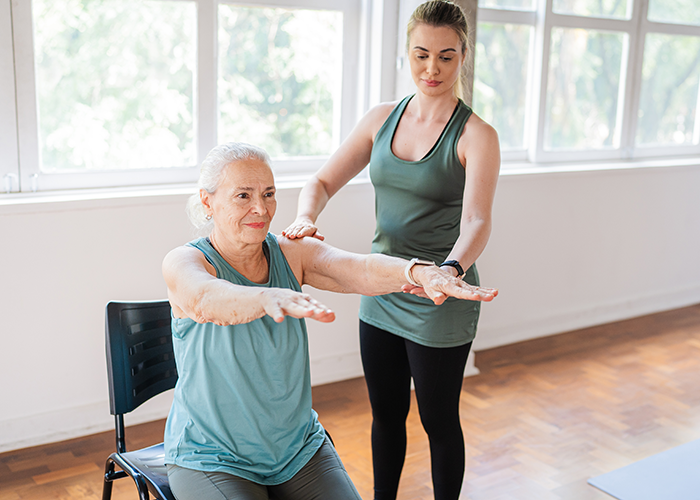
Fall Prevention: Balancing Class

See more about reducing falls. Get the case study.

95% reduction in hospitalizations and an increase in NOI.
Tiffany Village and Kenny’s Pond Case Study

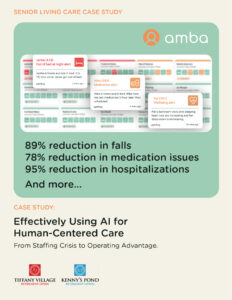
This case study covers two years of data at Tiffany Village and Kenny’s Pond. They experienced an 89% reduction in falls, a 78% reduction in medication issues and a 95% reduction in hospitalizations while boosting NOI.


Request the case study.

This field is for validation purposes and should be left unchanged.

10 ways to prevent a fall before it happens.

  1. Pay attention to what changed.
    A sudden change in sleep, bathroom activity, mobility, behavior or overall routine may be an early indication that something isn’t right. AHRQ specifically identifies recent changes in condition as important fall-risk indicators.
  2. Look beyond mobility.
    Acute illness, chronic conditions, medication effects, deconditioning, cognition and environmental factors can all contribute. Treat fall prevention as a whole-person health issue.
  3. Make strength and balance part of everyday life.
    Walking, strength exercises, balance work and programs such as Tai Chi can improve strength and balance and help reduce fall risk.
  4. Review medications, and review them again when something changes.
    Some medications can contribute to dizziness, drowsiness, impaired balance, vision changes and slower reaction time. Medication review should be part of an ongoing fall-prevention strategy, particularly after medication changes.
  5. Don’t overlook the bathroom.
    Changes in bathroom frequency can be information worth investigating, rather than simply accepting another nighttime trip to the bathroom as routine. CDC recommends addressing bathroom and environmental hazards as part of fall prevention.
  6. Check vision, feet and footwear.
    Poor vision and inappropriate footwear can both increase fall risk. Encourage regular eye care, foot care and properly fitting.
  7. Make the environment work for the resident.
    Look for poor lighting, clutter, uneven or wet flooring, unstable furniture, inaccessible belongings and equipment problems. The goal is simply to remove unnecessary hazards.
  8. Learn from every fall, and every near fall.
    Look for and document patterns: What time did it happen? What was the resident doing? Had something changed clinically? Had there been previous falls or near misses? AHRQ recommends systematic post-fall assessment and using fall data as part of ongoing quality improvement.
  9. Personalize the prevention plan.
    The person who gets up at 2 a.m. to use the bathroom doesn’t necessarily need the same intervention as someone experiencing dizziness after a medication change. AHRQ recommends individualized, interdisciplinary care plans based on each resident’s particular risks.
  10. Stop waiting for the fall to tell you who’s at risk.
    Traditional fall prevention often depends on periodic assessments and what care teams can observe. Continuous passive health monitoring can add another layer by identifying changes in an individual’s normal patterns so the care team has more information about who may need attention today.