Beyond the Burnout: How Caregiver Workload Reduction Tech is Saving Senior Living Operations
In boardrooms across the senior living sector, one topic dominates every strategic discussion: staffing. The industry is facing a brutal reality where the demand for beds is rising, but the supply of qualified caregivers is shrinking.
For executive directors and owners, the traditional playbook—running recruitment ads and offering signing bonuses—is no longer enough. The current staffing model is unsustainable because it relies on human labor for tasks that are repetitive, manual, and mentally draining.
The communities that will thrive in the next decade are those that pivot toward a new strategic imperative: adopting caregiver workload reduction tech.
This isn’t about replacing the human touch; it’s about protecting it by using intelligent technology to handle the heavy lifting of monitoring and routine checks.
The Invisible Burden on Your Staff
To understand the value of workload reduction technology, executives must first recognize the “invisible burden” their staff carries.
In a typical assisted living environment, caregivers spend a disproportionate amount of time on “just in case” activities. They walk miles during a shift performing scheduled room checks on sleeping residents, often waking them in the process. They respond to a high volume of nurse call alerts, many of which are non-urgent or accidental.
This constant state of low-level alertness and repetitive physical activity leads to cognitive overload. When a caregiver is exhausted from walking hallways, they have less capacity for the meaningful, empathetic interactions that define quality care. Burnout is rarely caused by one major event; it is death by a thousand manual tasks.
Defining Caregiver Workload Reduction Tech
True caregiver workload reduction tech goes beyond digital timesheets or basic tablets. It refers to systems designed to collect and analyze data autonomously, and to alert staff only when human intervention is required.
The shift is from Active Checking to Passive Sensing.
Instead of a caregiver physically opening a door every two hours to check on a resident, intelligent sensors silently monitor room activity, sleep patterns, and bathroom use in the background. The technology handles the “watching,” freeing the caregiver to do the “caring.”
The Executive Business Case for Implementation
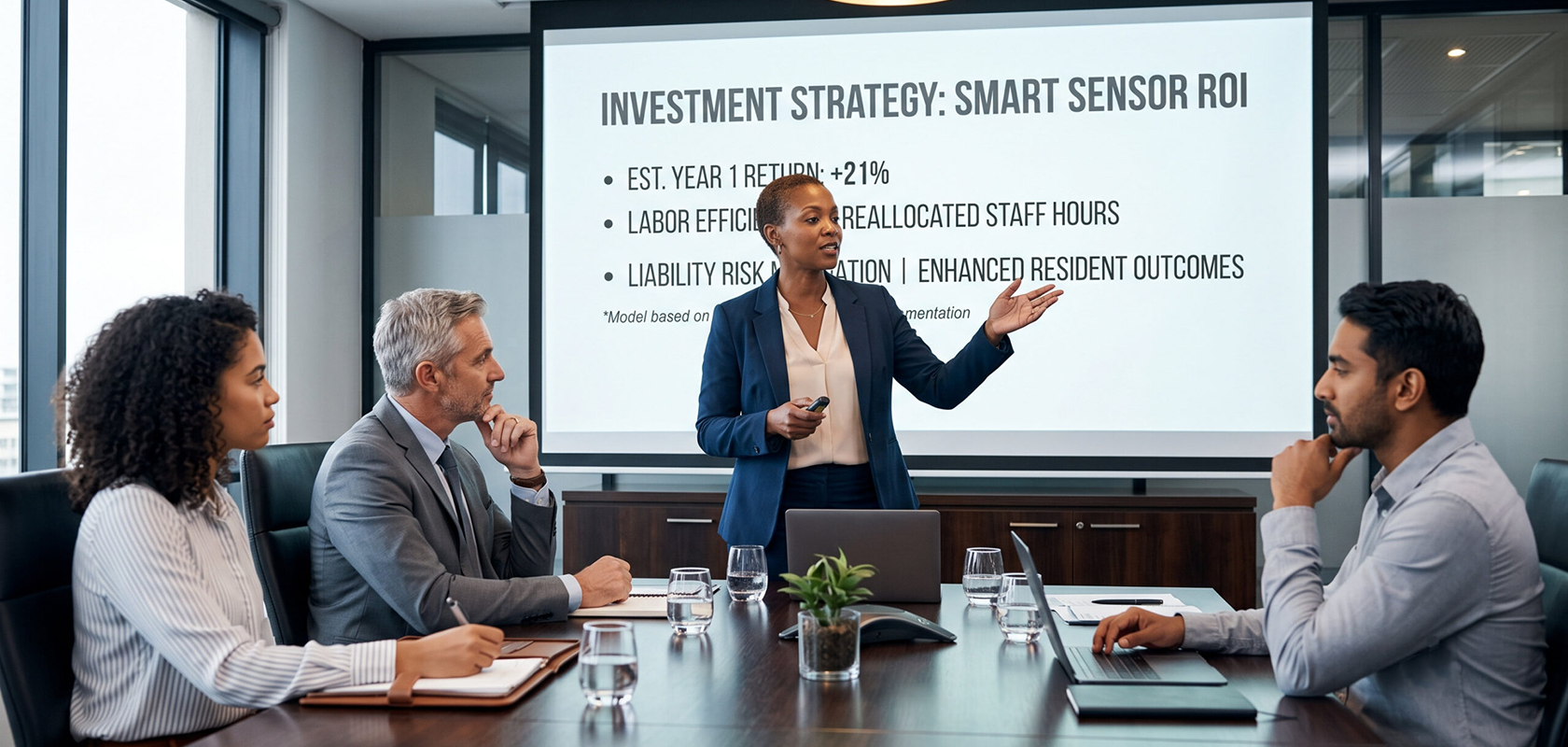
Investing in technology designed to reduce staff workload isn’t just an HR initiative; it is a critical operational strategy with direct impact on the bottom line.
1. Improving Retention by Lowering Stress
The most expensive staff member is the one who leaves. High turnover crushes margins through agency costs and constant retraining. By implementing solutions that remove drudgery from the workday, you signal to your staff that you value their time and well-being. Caregivers equipped with innovative, supportive tools feel less overwhelmed and are more likely to stay long-term.
2. Transitioning to Exception-Based Workflows
Workload-reduction technology enables managers to move away from rigid, inefficient schedules and toward exception-based care.
If Mrs. Johnson is sleeping soundly at 2 AM, there is no need to disturb her or tie up a staff member to check on her. However, if the technology detects she has been in the bathroom for an unusually long time, an alert is sent immediately. Staff effort is directed only where it is needed most, maximizing the efficiency of every shift.
3. Enhancing Resident Safety and Marketing Appeal
Ironically, by relying less on manual checks, safety actually improves. Human checks are intermittent; passive monitoring systems are continuous, 24/7.
Families are increasingly sophisticated buyers. Demonstrating that your facility uses advanced technology to keep residents safe without being intrusive is a powerful competitive differentiator. It assures families that their loved ones are being monitored even when a caregiver isn’t in the room.
The Amba Approach: Technology That Serves People
At Amba, we understand that technology forced upon an already stressed workforce will fail. That’s why our solutions are designed specifically to reduce caregiver workload.
Our platforms integrate seamlessly into the background of a resident’s room, providing vital health and safety data without requiring constant staff input. We turn overwhelming streams of data into simple, actionable insights.
The goal is to create an environment where caregivers can breathe easier, knowing the technology has their back. When staff are less stressed, residents are happier, and operations run smoothly.
Is your facility ready to move from reactive staffing to proactive operations?
Stop managing burnout and start preventing it.
- Learn more about Amba’s approach to caregiver support.
- Contact us today for a consultation on implementing workload reduction technology in your community.