Senior Care’s New Frontier: Fall Detection & Prevention Tech
For any senior care community, ensuring resident safety is the highest priority. Among the many challenges, preventing falls stands out as a critical, daily concern. A fall can be a life-altering event for a resident, often leading to serious injury, a decline in mobility, and a loss of confidence. For care communities, falls not only impact resident well-being but also increase operational strain, raise liability risks, and damage a facility’s reputation.
Traditional fall-prevention strategies, such as regular manual checks and installing grab bars, have been the standard for decades. While these methods are essential, they are reactive and labor-intensive. They rely on caregivers being in the right place at the right time, a near-impossible task in a busy care environment. But the landscape of senior care is changing. Advances in technology are offering a new, proactive approach to keeping residents safe.
This guide explores the transformative impact of modern fall-detection and prevention technology. We will cover how these systems work, their profound benefits for residents and staff, and how to choose and implement the right solution for your community. By embracing this technology, you can move from a reactive “check-and-see” model to a proactive, data-driven approach that enhances safety, boosts efficiency, and provides a higher standard of personalized care.
The Limitations of Traditional Fall Prevention
For years, senior care communities have relied on established practices to mitigate fall risks. These methods underpin resident safety protocols but have inherent limitations that can leave residents vulnerable.
Reactive, Not Proactive
The cornerstone of traditional fall prevention is the scheduled check-in. Caregivers walk the halls, often at night, to manually confirm that residents are safe in their rooms. While well-intentioned, this method is fundamentally reactive. A caregiver might discover a fall that happened minutes or even hours earlier. Those critical moments immediately after a fall are when prompt medical attention can make the most significant difference in a resident’s outcome. Scheduled checks create unavoidable gaps in monitoring, leaving residents without immediate support when they need it most.
The Human Element
Care staff are the heart of any senior living community, but they are also human. In a high-pressure environment with competing demands, even the most dedicated caregiver can be stretched thin. Manual checks are repetitive and time-consuming, pulling staff away from more meaningful, resident-focused interactions. This repetitive strain can lead to “checklist fatigue,” in which the focus shifts from genuine observation to merely completing a task. Furthermore, manual checks are disruptive, particularly at night. Repeatedly opening doors and turning on lights can disturb a resident’s sleep, which is crucial for their overall health, cognitive function, and even their stability.
Environmental Modifications
Physical changes to the environment, such as installing grab bars in bathrooms, ensuring clear pathways, and using non-slip flooring, are vital components of fall prevention. These modifications are effective at reducing hazards, but they don’t address the full spectrum of fall risks. They don’t account for health-related changes, such as sudden dizziness, medication side effects, or reduced mobility. A resident can still fall in a perfectly prepared room. While essential, environmental modifications are passive measures that cannot actively monitor a resident’s condition or alert staff to an incident.
Wearable Devices
Personal emergency response systems (PERS), often in the form of pendants or wristbands, were a significant step forward. They give residents a way to call for help themselves. However, their effectiveness depends entirely on the resident’s ability and willingness to use them. In the panic of a fall, a resident might not be able to press the button. Some residents forget to wear their devices, find it stigmatizing, or take it off at night when many falls happen. As a result, reliance on wearable devices can create a false sense of security for both residents and staff.
While these traditional methods will always have a place in a comprehensive safety strategy, their limitations highlight the need for a more intelligent, continuous, and proactive solution. Technology offers a way to fill these gaps, empowering caregivers to provide faster, more effective care.
The Rise of Smart Fall Detection Technology
To address the shortcomings of traditional methods, a new technology has emerged: ambient sensing. Unlike wearables that require active participation from the resident, ambient technology works passively in the background, using a network of discreet sensors to create an innovative, responsive environment. This approach provides continuous, non-intrusive monitoring that enhances safety without compromising a resident’s dignity or independence.
How Ambient Sensing Works
Ambient fall detection systems use strategically placed sensors within a resident’s room. These devices work together to provide a comprehensive view of the resident’s activity and well-being.
- Motion Sensors: These sensors detect movement within a room. Advanced systems can learn a resident’s typical patterns—when they usually get up, how often they move around, and which areas of the room they use most. Deviations from these patterns, such as prolonged inactivity after getting out of bed, can trigger an alert for caregivers to check in.
- Door Sensors: Placed on the resident’s door and bathroom door, these sensors track entries and exits. This data helps identify wandering risks, especially for residents with cognitive impairments. For example, if a resident leaves their room late at night and doesn’t return, the system can notify staff. They also provide insights into bathroom use, a key indicator of potential health issues such as UTIs.
- Bed & Chair Sensors: These are pressure-sensitive mats placed under a mattress or a chair cushion. They can tell caregivers not only if a resident is in or out of bed, but also the quality of their sleep. Restless nights can be an early indicator of pain or anxiety. Most importantly, if a resident gets out of bed and doesn’t return within a set timeframe, it may indicate a fall and prompt an immediate staff alert.
- Radar-Based Fall Detection: Some of the most advanced systems use wall-mounted radar technology to monitor a room. These devices can detect a person’s posture and identify sudden changes in elevation and velocity that indicate a fall. Because they don’t use cameras, they can confirm a fall has occurred while fully protecting the resident’s privacy.
The Power of Predictive Insights
The true innovation of these systems lies in their ability to turn raw data into actionable and even predictive insights. Modern platforms use artificial intelligence (AI) to analyze sensor data over time. The system learns what is “normal” for each resident.
This allows the technology to go beyond simply detecting a fall after it happens. Identifying subtle behavioral changes can help prevent falls before they occur. For example:
- An increase in nighttime bathroom trips could signal a urinary tract infection, a common cause of dizziness and falls.
- A gradual decrease in daytime activity may indicate reduced mobility or the onset of an illness.
- Unsteady movement patterns detected by motion sensors can alert staff that a resident may need a mobility aid or a physical therapy assessment.
By flagging these early warning signs, ambient technology transforms the care model from reactive to proactive. Caregivers receive alerts like, “Pat has been out of bed for 20 minutes,” which is far more effective than a generic instruction to “go and check on all residents.” This allows staff to intervene at the right moment, addressing potential issues before they escalate into a crisis.
Benefits for the Entire Care Community
Implementing advanced fall detection and prevention technology creates a ripple effect of positive change that benefits everyone involved in the care ecosystem—from residents and their families to caregivers and operators.
For Residents: Dignity, Independence, and Safety
- Enhanced Safety: The most immediate benefit is a safer living environment. Continuous, real-time monitoring means that if a fall does occur, help is dispatched within moments, not hours. This rapid response can dramatically reduce injury severity and improve recovery outcomes.
- Increased Independence: Ambient sensors work in the background, eliminating the need for residents to remember to wear a device or actively call for help. This non-intrusive approach allows them to live more freely and confidently, knowing that a safety net is always there.
- Improved Quality of Life: Proactive insights lead to better care. By identifying potential health issues early, caregivers can intervene sooner and prevent complications. Furthermore, reducing disruptive nighttime checks allows residents to get the restorative sleep they need for their physical and mental well-being.
For Caregivers: Efficiency, Empowerment, and Job Satisfaction
- Reduced Caregiver Burden: Manual, repetitive tasks, such as nighttime checks, are a significant source of staff burnout. Automating this process frees up caregivers’ time and energy, allowing them to focus on higher-value, person-centered care.
- Data-Driven Care: Instead of relying on guesswork, caregivers have objective data on each resident. They can see sleep patterns, mobility trends, and bathroom frequency at a glance. This empowers them to make more informed decisions and deliver more personalized and effective care.
- Increased Job Satisfaction: When caregivers feel they are making a real difference rather than just running through a checklist, their job satisfaction soars. Technology that helps them be more effective and responsive reduces stress and fosters a more positive work environment, which, in turn, can reduce staff turnover.
For Operators: Operational Excellence and Financial Health
- Improved Quality Metrics: Reducing falls directly affects key quality metrics important for licensing, reputation, and attracting new residents. Demonstrating a commitment to innovative safety technology can become a powerful marketing differentiator.
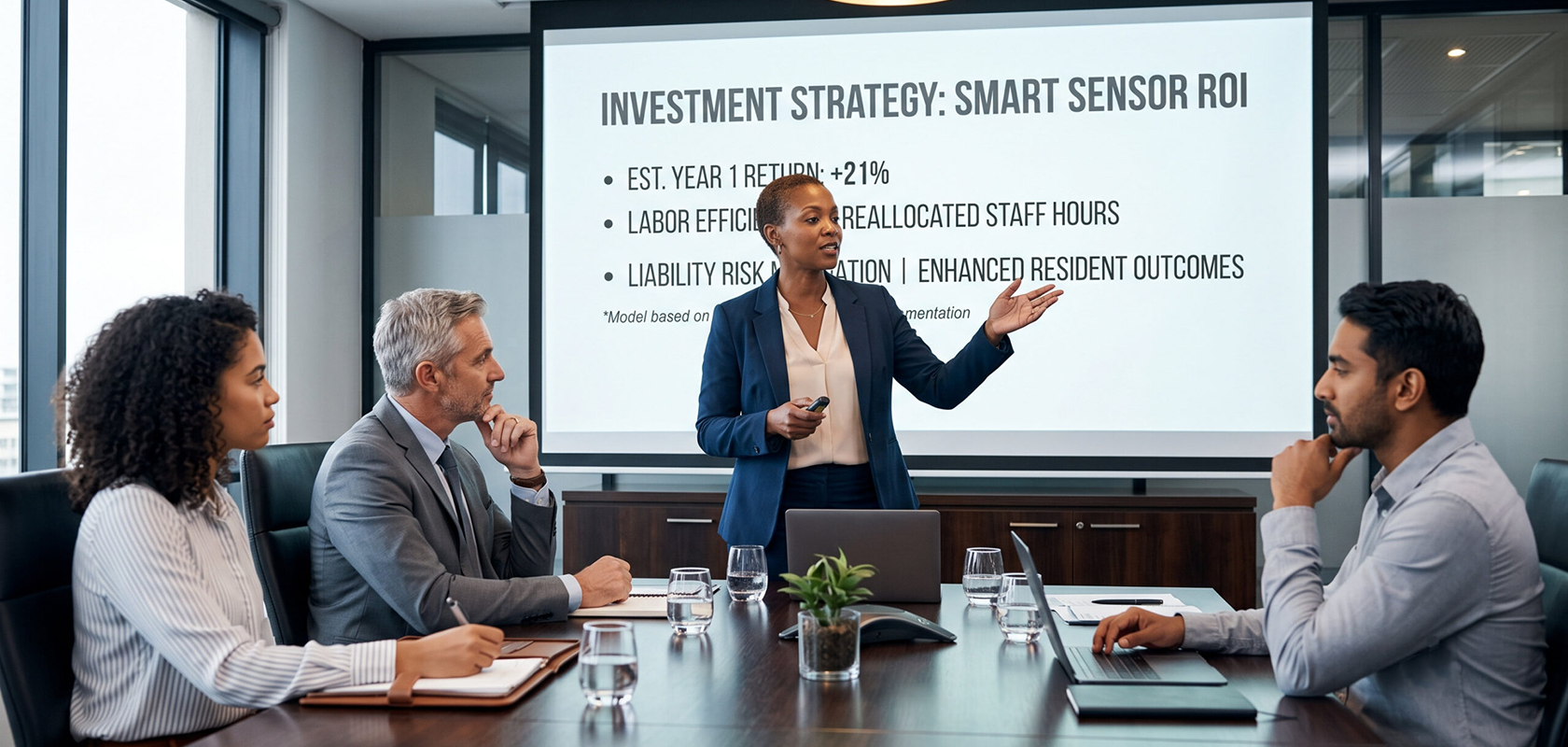
- Reduced Costs and Liability: Falls are expensive. They can lead to hospitalizations, increased staffing needs, and potential legal action. By preventing falls and enabling faster response times, technology can significantly lower these associated costs. Some facilities report reductions of up to 40% in nighttime care costs and in falls.
- Efficient Staffing: Data-driven insights allow for more intelligent staff allocation. Operators can ensure that caregiver resources are directed to where they are needed most, optimizing workflow and preventing residents from being overlooked. This leads to a more efficient and productive care team.
For Families: Peace of Mind
- Unprecedented Reassurance: For families, knowing that their loved one is being monitored 24/7 by an intelligent system provides invaluable peace of mind. They can rest assured that, in the event of an incident, the care team will be alerted immediately.
- Better Communication: Many platforms offer family portals where designated relatives can view high-level wellness trends (without compromising privacy). This transparency helps families feel more connected and informed about their loved one’s care.
Transform Your Community’s Approach to Care
The adoption of fall-detection and prevention technology is no longer a question of “if” but “when.” In an increasingly competitive landscape, leveraging innovative solutions is essential for providing exceptional care, ensuring resident safety, and maintaining operational efficiency. By moving beyond outdated, reactive methods, you can empower your care team, enhance resident independence, and build a safer, more responsive community.
At AMBA, we specialize in providing ambient care technology that is both powerful and easy to implement. Our integrated system of discreet sensors offers real-time alerts and predictive insights, allowing your team to deliver proactive, personalized care. With installation taking as little as 10 minutes per room, you can transform your facility with minimal disruption.
Take the first step toward a safer and more efficient future for your community. Contact AMBA today to learn how our technology can help you improve your team’s efficiency and elevate your standard of senior care.